
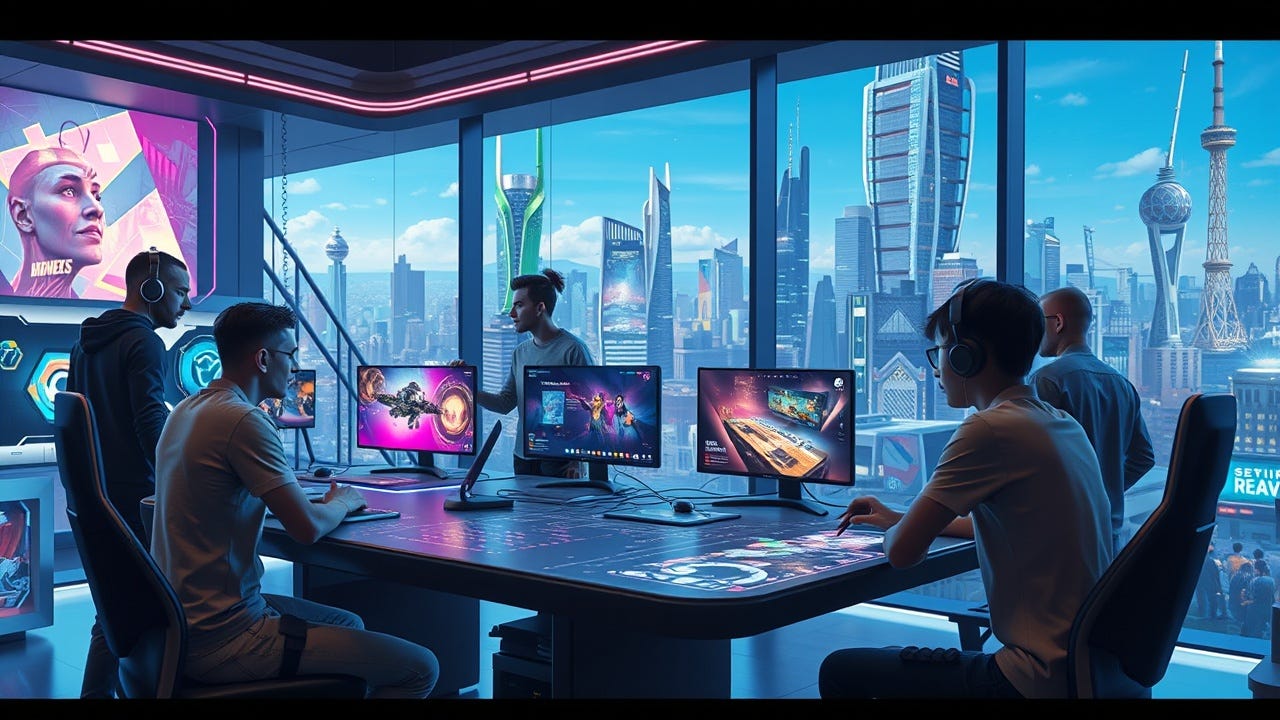
Artificial Intelligence (AI) is often described as the next technological revolution — one that, unlike any before it, redefines not just how we live but how we create, play, and interact. Every major innovation in history had a clear purpose, from the invention of the computer to the rise of the internet. AI, however, is different. Its potential seems limitless, with applications extending across nearly every field imaginable — from healthcare and finance to education, mental health benefits and, increasingly, gaming.
Sweden, known for its tech-savvy population and innovative gaming industry, is at the heart of this transformation. Let’s explore how AI is reshaping the world of gaming — from design and storytelling to ethics and user experience.
The Role of AI in Modern Video Games
Artificial Intelligence has been part of gaming for decades, though often in subtle ways. Early examples include the predictable “computer opponents” in racing games or the algorithmic behaviour of enemies in arcade shooters. These basic systems laid the groundwork for today’s far more advanced AI-driven gaming environments.
Modern AI can adapt to a player’s behaviour, learn from it, and even respond in ways that make every playthrough unique. Gone are the days when games followed linear paths; AI now powers dynamic worlds where outcomes evolve based on every decision.
From console classics to mobile apps, the technology is embedded in everything — creating smarter opponents, procedurally generating worlds, and tailoring each experience to fit individual play styles.
Smarter Game Worlds Through Machine Learning
Machine learning, one of AI’s most powerful tools, allows systems to “learn” from data and improve over time. In gaming, this means developers can create characters and worlds that grow with the player.
For instance, AI can design levels that adapt to skill progression, ensuring that beginners aren’t overwhelmed while advanced players still face challenges. This adaptability creates a sense of fairness — something Swedish gamers, who value balance and equality, particularly appreciate.
AI also assists developers by automating time-consuming processes. Map generation, environmental detail, and even weather systems can now be built using algorithms that simulate natural complexity. As a result, studios can focus more on creativity and storytelling, leaving repetitive coding to the machines.
Personalized Storytelling and Emotional Depth
In traditional games, player choices were limited to pre-programmed dialogue options or predictable branching paths. Today, AI-driven narrative engines are revolutionising storytelling.
By analysing player decisions, tone, and pacing, AI can dynamically alter dialogue, outcomes, and emotional arcs. The result is a personalised journey — no two players experience the same story.
This is particularly evident in role-playing and simulation games, where AI characters can “remember” past interactions through deep learning models. They react differently based on the player’s history, creating a more believable and emotionally resonant world.
Imagine a non-player character (NPC) who recalls a broken promise from hours earlier, or who adapts their trust level based on your moral choices — this is the next frontier in immersive gaming.
The Evolution of NPCs: From Background to Believable
NPCs have always been essential to world-building, but until recently, they were static — repeating the same dialogue or performing limited functions. AI now transforms them into living, reactive entities capable of realistic conversation and emotion.
Through Natural Language Processing (NLP), NPCs can hold dynamic conversations, interpret tone, and respond contextually. This breakthrough is especially visible in open-world games where player interaction is frequent.
Swedish studios, such as Paradox Interactive and Avalanche, are exploring these AI systems to bring their worlds to life. Instead of background fillers, NPCs become co-creators of the narrative — remembering, evolving, and challenging the player’s moral compass.
Ethics and the Human Element
While the benefits of AI in gaming are immense, they also raise complex ethical questions. Who controls the algorithms that decide how we play? Can AI-driven worlds manipulate players emotionally or financially?
Developers and regulators in Sweden have taken these concerns seriously. The Swedish Media Council (Statens medieråd) and gaming associations promote transparency and responsibility in the use of AI tools.
Experts agree that human oversight must remain central. AI may enhance creativity, but it cannot replace human intuition, empathy, or ethical judgment. Designers must ensure that algorithms serve players — not the other way around.
Deep Learning and Procedural Creativity
One of the most exciting frontiers of AI in gaming lies in procedural creativity — the ability to generate new content autonomously. Using deep learning, AI can compose soundtracks, paint textures, or build quests without direct human input.
This “co-creation” between developers and algorithms accelerates production and reduces costs while maintaining artistic quality. It also opens possibilities for indie studios and smaller teams to compete globally, a development particularly relevant in Sweden’s thriving independent gaming scene.
In the future, AI may even enable players themselves to design games simply by describing their vision — an idea that once sounded like science fiction but now feels within reach.
AI in Competitive and Online Gaming
Beyond single-player experiences, AI has transformed multiplayer environments as well. Machine learning helps detect cheating, balance competitive gameplay, and improve matchmaking.
For example, online casinos and eSports platforms use AI analytics to monitor patterns and prevent fraudulent activity. Meanwhile, AI coaches analyse player performance, offering training feedback similar to real-world sports analytics — a concept that appeals strongly to Sweden’s growing eSports community.
In the online casino world, AI also personalises bonuses and recommendations while maintaining player safety through behavioural monitoring. The balance between enjoyment and responsibility remains key.
The Emotional Connection: AI and Wellbeing
Gaming has always been more than entertainment; it’s a psychological outlet — a way to relax, socialise, and build resilience. AI now enhances this by tracking emotional cues and adapting gameplay accordingly.
For example, some experimental systems can detect frustration or fatigue through voice or biometric feedback, adjusting game difficulty or tone to reduce stress. This fusion of technology and psychology promotes digital wellbeing — echoing Sweden’s holistic approach to mental health and sustainable tech use.
AI could even help identify early signs of gaming addiction or emotional distress, offering timely interventions or play reminders. As with all innovation, balance and ethical design are essential.
Looking Ahead: The Future of AI in Gaming
The integration of AI into gaming is only accelerating. As algorithms become more sophisticated, we can expect even greater immersion, realism, and player agency.
Virtual reality (VR) and AI will soon merge to create worlds that respond not just to commands but to emotions and behaviour. Imagine an environment that changes colour, sound, or story pace based on your mood — a fully adaptive reality.
At the same time, developers must remain vigilant. As AI-driven systems become more autonomous, protecting privacy, mental wellbeing, and creative integrity will define the future of gaming ethics.
For Swedish gamers and creators alike, this is an exciting era — one where technology and humanity must evolve together, ensuring play remains not only intelligent but deeply human.
In many ways, learning about gaming AI mirrors learning financial systems like introduction to trading — both demand understanding, adaptability, and respect for the forces driving them.


